Introduction
International business is growing as companies buy and sell products across borders. From wholesale suppliers to manufacturers and distributors, businesses need reliable payment solutions to receive money from international customers and pay overseas partners. However, cross-border transactions can involve currency conversion fees, processing delays, security concerns, and different banking requirements.
B2B Payment Gateways for Cross-Border E-commerce help businesses manage these challenges by supporting international payments, multiple currencies, payment security, and convenient checkout experiences. Choosing the right gateway can help companies improve cash flow, simplify financial operations, and build trust with international buyers.
In this guide, we explore essential payment gateways, their key features, and how businesses can select a solution that meets their international payment needs.
What Are B2B Payment Gateways for Cross-Border E-commerce?
B2B payment gateways are payment technology solutions that help businesses accept and process payments from other businesses. Unlike many consumer transactions, B2B payments may involve large invoices, recurring orders, bank transfers, negotiated payment terms, and multiple currencies.
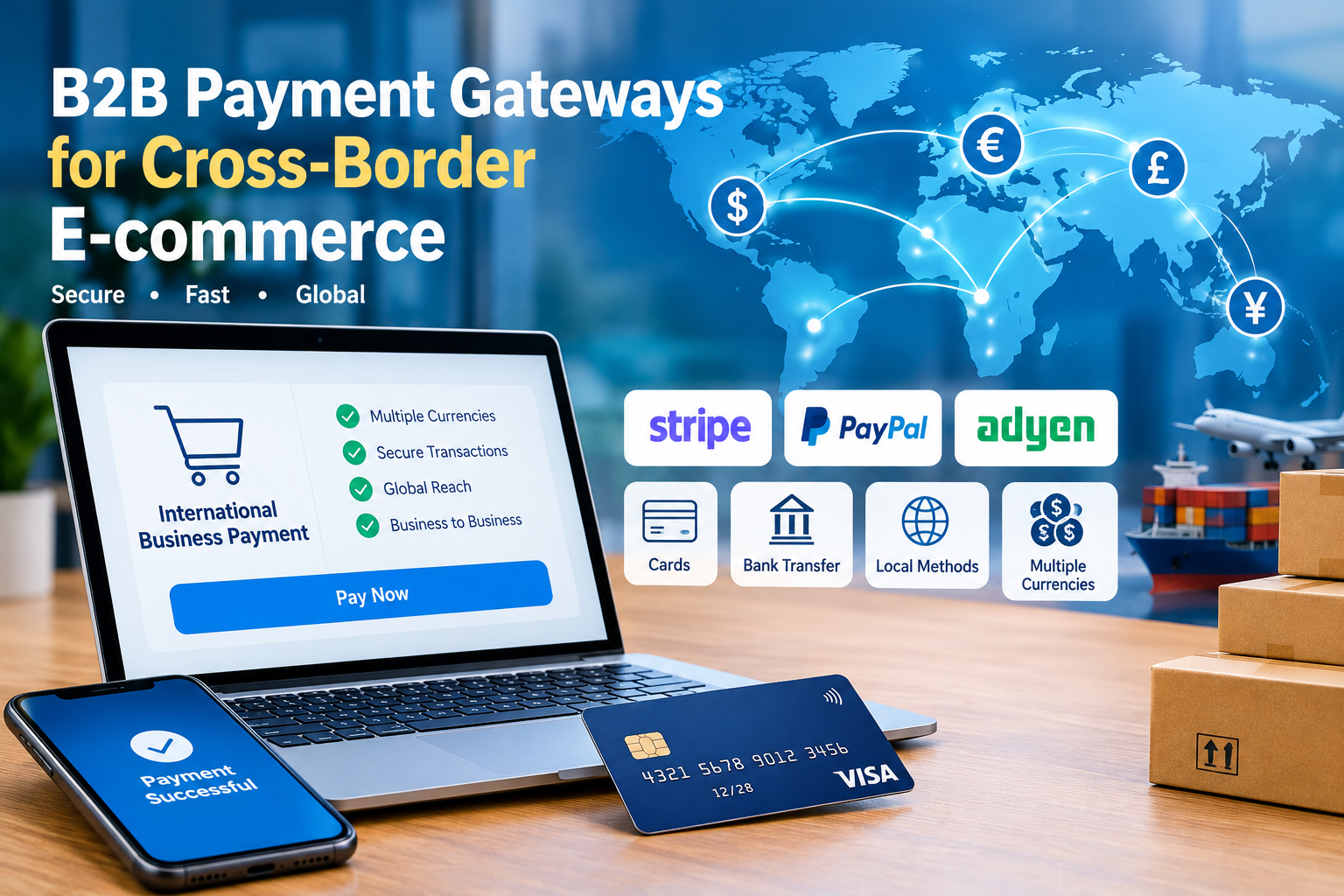
For cross-border e-commerce, these gateways connect online stores or business purchasing platforms with payment processors and financial institutions. Depending on the provider, they may support credit and debit cards, digital wallets, international bank transfers, and local payment methods.
A suitable gateway can make it easier for international customers to pay in their preferred currency while helping sellers manage transactions across different markets.
Best B2B Payment Gateways for International Transactions
1. Stripe
Stripe is a popular option for businesses that want to accept online payments from international customers. It offers payment processing tools, checkout integrations, and support for multiple payment methods and currencies, depending on the country and service used.
Stripe can be useful for B2B e-commerce stores that sell products online, manage repeat orders, or need payment integrations with their existing software. Its APIs also allow developers to build customized payment experiences.
Best for: Online businesses that need flexible payment integrations and international card payments.
Before choosing Stripe, check whether your business is based in a supported country and whether the payment methods you need are available.
2. PayPal Business
PayPal Business allows companies to accept commercial payments and send or receive money through supported markets. Many customers recognize the PayPal brand, which can make checkout more familiar for international buyers.
Businesses may use PayPal for online orders, payment requests, and invoices, depending on the features available in their region. However, international commercial payments and currency conversions may involve additional fees, so businesses should review the applicable rates before choosing it.
Best for: Businesses that want a familiar payment option and convenient online payment collection.
3. Adyen
Adyen provides payment infrastructure for businesses that need to manage transactions across multiple markets. Its platform supports various payment methods and offers integrations for online and in-person payments.
For B2B sellers operating in several countries, Adyen may help bring different payment methods into one payment system. Available options depend on the market, currency, and integration. Businesses should discuss eligibility and pricing with the provider before implementation.
Best for: Larger businesses and international merchants that need a unified payment platform.
4. Bank Transfers and International Business Payments
Bank transfers remain important for B2B e-commerce, particularly when orders involve large amounts. Some businesses prefer bank transfers because they fit established invoicing, accounting, and supplier-payment processes.
Depending on the provider and countries involved, businesses may use international wire transfers or local bank-payment methods. They should compare transfer fees, exchange rates, processing times, and the information required from the sender and recipient.
Best for: Wholesale purchases, large invoices, and business transactions where card processing fees may be costly.
5. Local Payment Methods
International customers do not all use the same payment methods. Some markets favor bank transfers, while others commonly use local digital payment services or particular card networks.
Offering payment options familiar to buyers can reduce checkout friction and help businesses serve customers in different countries. A company should prioritize payment methods based on where its customers are located rather than adding every available option.
Best for: Businesses expanding into specific international markets and serving buyers with different payment preferences.
Key Features to Look for in a B2B Payment Gateway
Choosing among B2B Payment Gateways for Cross-Border E-commerce requires more than comparing brand names. Businesses should evaluate the features that directly affect payment costs, customer experience, and financial management.
Multi-Currency Support
A good gateway should support the currencies your customers use. Paying in a familiar currency can make international purchasing easier, while transparent exchange rates help businesses understand the actual cost of a transaction.
Check which currencies the provider supports for processing, settlement, and withdrawals. These are not always the same.
Security and Fraud Prevention
International payments can expose businesses to fraud, unauthorized transactions, and chargebacks. Look for secure payment processing, encryption, authentication tools, and fraud-monitoring features.
Depending on the transaction and market, additional authentication such as 3D Secure may be available. Businesses should also confirm that their payment processes meet applicable security and regulatory requirements.
Integration With E-commerce Platforms
Payment gateways should work smoothly with your online store, invoicing system, accounting software, and customer relationship management tools.
Good integration reduces manual data entry, improves payment tracking, and helps teams reconcile transactions more efficiently. Before selecting a gateway, confirm compatibility with your existing technology.
Transparent Fees
Cross-border payments can involve processing fees, currency conversion costs, international transaction charges, and bank withdrawal fees. These expenses can reduce profit margins, especially for businesses handling frequent or high-value orders.
Compare the total cost of receiving payments rather than looking at one advertised transaction fee. Ask providers about refunds, chargebacks, settlement costs, and any additional charges that apply to your markets.
Benefits of Cross-Border Payment Gateways
The right payment solution can support international growth in several ways.
- Faster payment collection: Digital payment options can reduce the need for manual payment arrangements.
- Improved customer experience: Familiar payment methods and clear checkout steps can help buyers complete orders.
- Better cash flow management: Timely transaction records help businesses monitor incoming payments and outstanding invoices.
- Reduced administrative work: Automated payment updates and accounting integrations can simplify financial operations.
- International expansion: Support for additional markets and currencies can make it easier to serve overseas customers.
These benefits depend on the provider, the countries involved, and how the gateway is configured.
How to Choose the Right Payment Gateway
Start by identifying your main business requirements. Consider where your buyers are located, the average order value, the currencies you need, and whether customers pay by card, bank transfer, or invoice.
Next, compare each provider’s supported countries, payment methods, settlement options, fees, and integration capabilities. A small online wholesaler may prefer a straightforward setup, while a large distributor may need advanced reporting, enterprise integrations, and support for high transaction volumes.
It is also important to review customer support, refund procedures, payment disputes, and account verification requirements. Test the checkout process before launching it to customers, and make sure your team knows how to reconcile payments and handle failed transactions.
Finally, confirm that the provider can legally serve your business’s registered country. Availability for customers in a particular market does not necessarily mean businesses registered there can open merchant accounts.
Conclusion
B2B Payment Gateways for Cross-Border E-commerce help businesses accept international payments, manage different currencies, and simplify online purchasing. Stripe, PayPal Business, and Adyen offer different approaches to payment processing, while bank transfers and local payment methods can serve important needs in specific markets.
The best solution depends on your business location, customer base, transaction size, budget, and technical requirements. By comparing security, fees, supported currencies, and integration options, businesses can select a reliable payment system that supports international growth and creates a smoother experience for buyers.
Businesses can also explore Supply Chain Automation Tools to improve purchasing processes, manage inventory, and increase overall operational efficiency.
For more updates, visit SHINBIR MARKETER